Austria’s oldest alpine village
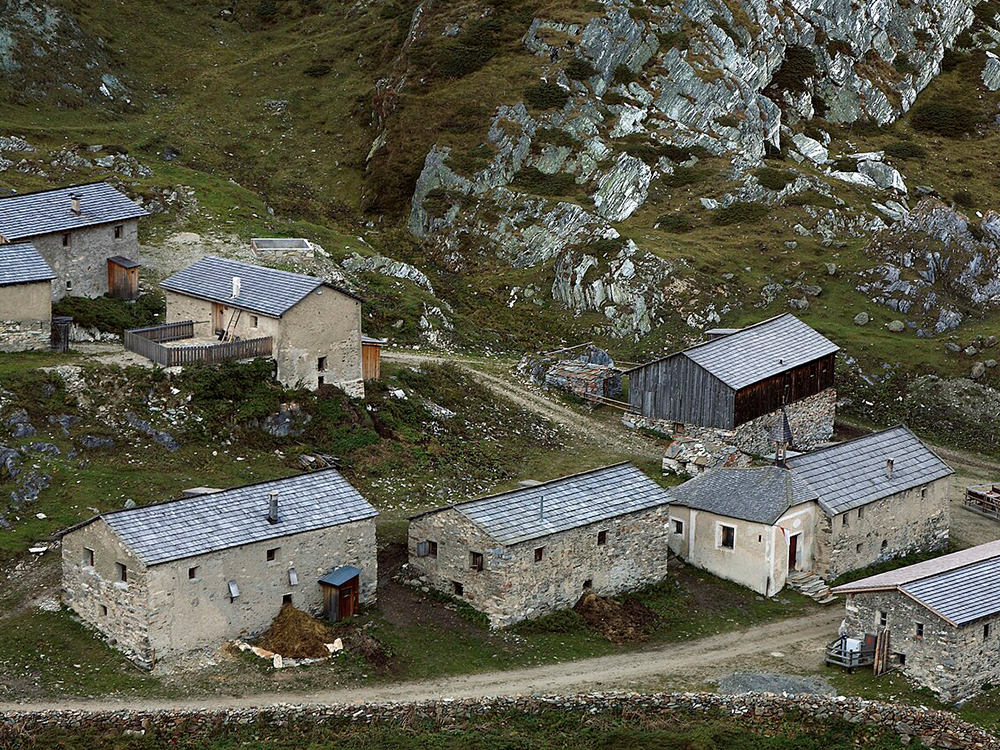
At the end of the tranquil Defereggental valley, close to the Italian border, lies one of Austria’s most remarkable mountain villages. The Jagdhausalmen consist of sixteen centuries-old stone mountain huts that have stood virtually unchanged amongst the mountain pastures for hundreds of years. Anyone visiting the Defereggental valley for its tranquillity and authentic mountain culture really ought not to miss this place.
What are the Jagdhausalmen?
The Jagdhausalmen are a historic alpine village situated at an altitude of around 2,000 metres, above the village of St. Jakob in Defereggen. It consists of sixteen sturdy stone buildings and is regarded as one of the oldest, almost entirely intact alpine villages in Austria.
It is striking that the buildings are constructed entirely from natural stone. Whilst many alpine huts are made of wood, the thick stone walls ensure that the huts can withstand the harsh winters in the Hohe Tauern.
The village is now a popular destination for hikers, but is still used for traditional alpine farming. In summer, livestock graze here, helping the landscape to retain its authentic character.
A history dating back to the Middle Ages
The history of the Jagdhausalmen stretches back centuries. When it was first mentioned in documents in 1212, it was not an alpine pasture but a mountain settlement inhabited all year round. At an altitude of over 2,000 metres, there were so-called ‘Schwaighöfe’ here: specialised cattle farms where people lived and worked all year round. That may sound surprising for such a high altitude, but in the early thirteenth century, the climatic conditions were more favourable than they were later on. Winters were milder, making permanent habitation here possible. Due to its remote location, the village was largely spared from large-scale modernisation.
When you walk amongst the stone huts, it feels as though time has stood still for a moment.
Across borders
Another remarkable detail is that, although the Jagdhausalmen are situated in East Tyrol, Austria, the grazing rights have for centuries largely belonged to farmers from South Tyrol, Italy. This is not a modern exception, but a historical right that already existed when Tyrol was still a single entity and the current national borders did not exist.
Every summer, South Tyrolean farmers drive hundreds of head of young cattle over the Klammljoch to the Jagdhausalmen. A special border arrangement is in place for this, ensuring that the cattle can legally cross the Austrian-Italian border without this centuries-old practice having to cease.
Hiking to the Jagdhausalmen
Most visitors start the hike from the car park at Oberhaus, above St. Jakob in Defereggen. The path climbs gradually through a wide valley with views of mountain pastures and streams. Along the way, you’ll regularly come across cows grazing here in the summer.
This walk is suitable for most walkers of average fitness. Bear in mind, however, that the round trip is a walk of around 15 km.
Some places feel as though they have stood the test of time. The Jagdhausalmen are one such place. Whilst borders shifted, the climate changed and the centuries passed, the stone houses remained. It is precisely this combination of history, simplicity, tranquillity and nature that makes a walk to the Jagdhausalmen one of the most special experiences in the Defereggental.